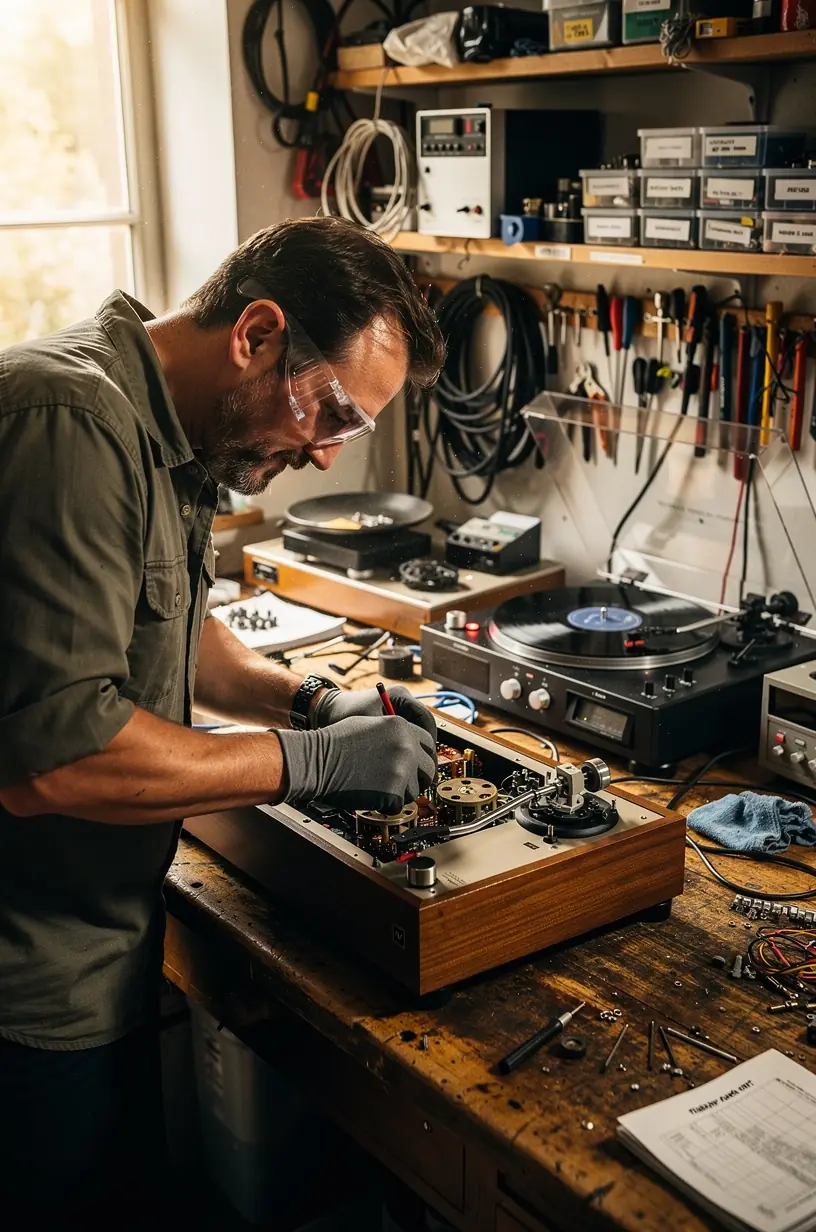
Understanding the Anatomy of Turntable Components
Vinyl turntables have been cherished by audiophiles for decades, yet many users may not fully understand the intricate components that contribute to the overall performance of their audio systems. This article aims to educate you about the anatomy of turntable components, helping you appreciate their roles and the importance of proper maintenance and repair.
Core Components of a Turntable
To grasp how turntables work, it’s essential to familiarize yourself with their main components:

- Platter: The rotating surface where the vinyl records are placed. A stable platter can minimize vibrations, which is crucial for sound quality.
- Motor: Provides the necessary rotation for the platter. Turntables typically use either belt drive or direct drive systems. According to research, belt drive systems are often preferred for their ability to reduce noise and vibrations.
- Tonearm: Holds the cartridge and stylus, converting the grooves on a vinyl record into electrical signals. Proper tonearm setup and alignment can significantly affect audio playback quality.
- Cartridge and Stylus: The cartridge houses the stylus, which physically contacts the record grooves. Experts recommend using high-quality cartridges for better sound reproduction.
The Role of Calibration and Maintenance
Understanding turntable components is vital for effective calibration and maintenance. Many users report that regular calibration can enhance sound accuracy. Calibration typically involves adjusting the tonearm alignment, tracking force, and anti-skating settings. These adjustments help to ensure that the stylus tracks the grooves properly, minimizing wear on both the record and the needle.
"Regular maintenance and correct calibration can prolong the life of your turntable and improve audio quality." - Industry Expert
Why Proper Maintenance Matters
Proper maintenance extends beyond just cleaning. It involves:
- Cleaning: Regularly cleaning your records and turntable components can prevent dust and dirt buildup, which can negatively impact sound quality.
- Replacement of Worn Parts: The stylus, in particular, should be replaced every 500-1000 hours of playback to maintain audio fidelity. Research indicates that a worn stylus can lead to audio distortion and potential damage to records.
- Storage and Environment: Storing your turntable in a stable environment away from moisture and extreme temperatures can prevent damage over time.
Conclusion
Understanding the anatomy of turntable components is crucial for any vinyl enthusiast. By knowing how each part functions and the importance of regular maintenance and calibration, users can significantly enhance their listening experience. While the process may require time and effort, properly caring for your turntable can yield rewarding results in sound quality and equipment longevity. For those looking to improve their turntable’s performance, seeking professional diagnostics or restoration services can provide additional peace of mind.
Learn More