Essential Tools for Turntable Repair and Maintenance
Maintaining your vinyl turntable is crucial for preserving sound quality and ensuring longevity. This article outlines the essential tools you need for effective turntable repair and maintenance, emphasizing their importance in keeping your analog audio equipment functioning optimally.
Understanding the Basics of Turntable Maintenance
Turntable maintenance involves a few essential practices that ensure your equipment operates smoothly. According to industry experts, regular diagnostics, calibration, and cleaning can significantly enhance performance. The tools used in these processes are designed to address common issues faced by vinyl enthusiasts, ranging from alignment to lubrication.

"Regular maintenance not only improves sound quality but also extends the lifespan of your turntable." - Audio Engineering Society
Essential Tools for Turntable Repair
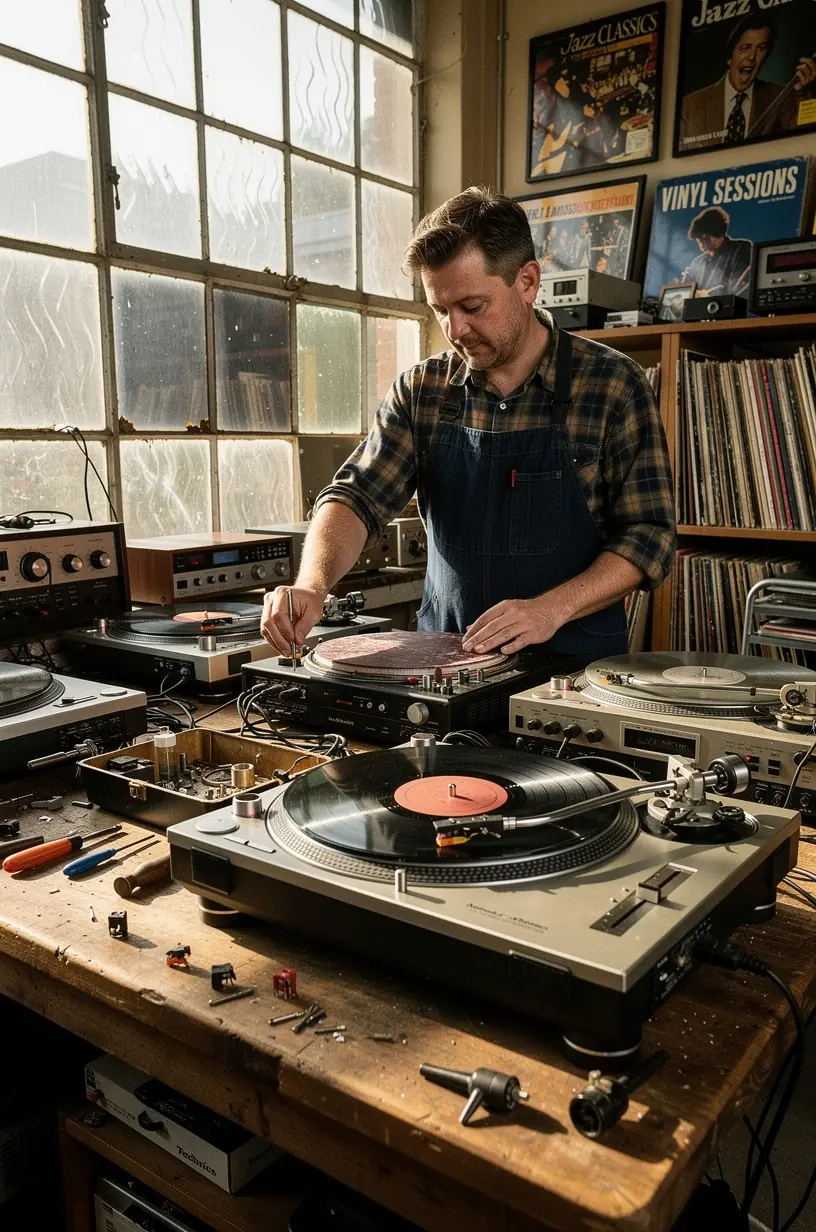
- Precision Screwdrivers: These are crucial for disassembling your turntable without damaging delicate components. A set typically includes various sizes to accommodate different screws.
- Leveling Tool: Ensuring your turntable is level is vital for accurate playback. Many users recommend using a bubble level for precise calibration, which can help avoid unwanted distortion.
- Cleaning Supplies: Regular cleaning can prevent dust accumulation. A microfiber cloth, anti-static brush, and specialized cleaning solution are often recommended by audio professionals.
- Alignment Protractor: This tool helps ensure the cartridge is correctly aligned, which is essential for optimal sound quality. According to research, proper alignment can reduce distortion and improve tracking.
- Stylus Force Gauge: Measuring and adjusting the stylus pressure is important, as incorrect pressure can lead to record wear. Many users report that this tool helps them maintain the ideal tracking force.
How to Apply These Tools Effectively
Using these tools effectively involves a systematic approach to turntable maintenance:
- Assess and Clean: Begin by cleaning your turntable with a microfiber cloth and anti-static brush. This process typically takes about 10-15 minutes but greatly enhances performance.
- Check Alignment: Use the alignment protractor to ensure your cartridge is correctly positioned. This method may require some practice, but is essential for sound integrity.
- Measure Stylus Force: Utilize the stylus force gauge to set the correct pressure. Adjustments should be made according to your turntable's specifications, which can be found in the user manual.
- Level the Turntable: After adjustments, ensure your turntable is level using a bubble level. This step is often overlooked but is critical for achieving the best audio output.
Conclusion
Investing in the right tools for turntable repair and maintenance can greatly improve your listening experience. While the process requires time and effort, many users find that regular upkeep leads to better sound quality and longer equipment life. Prioritize routine maintenance, educate yourself on proper techniques, and consider seeking professional help if needed. By following these practices, you can enjoy your vinyl collection for years to come.
Learn More