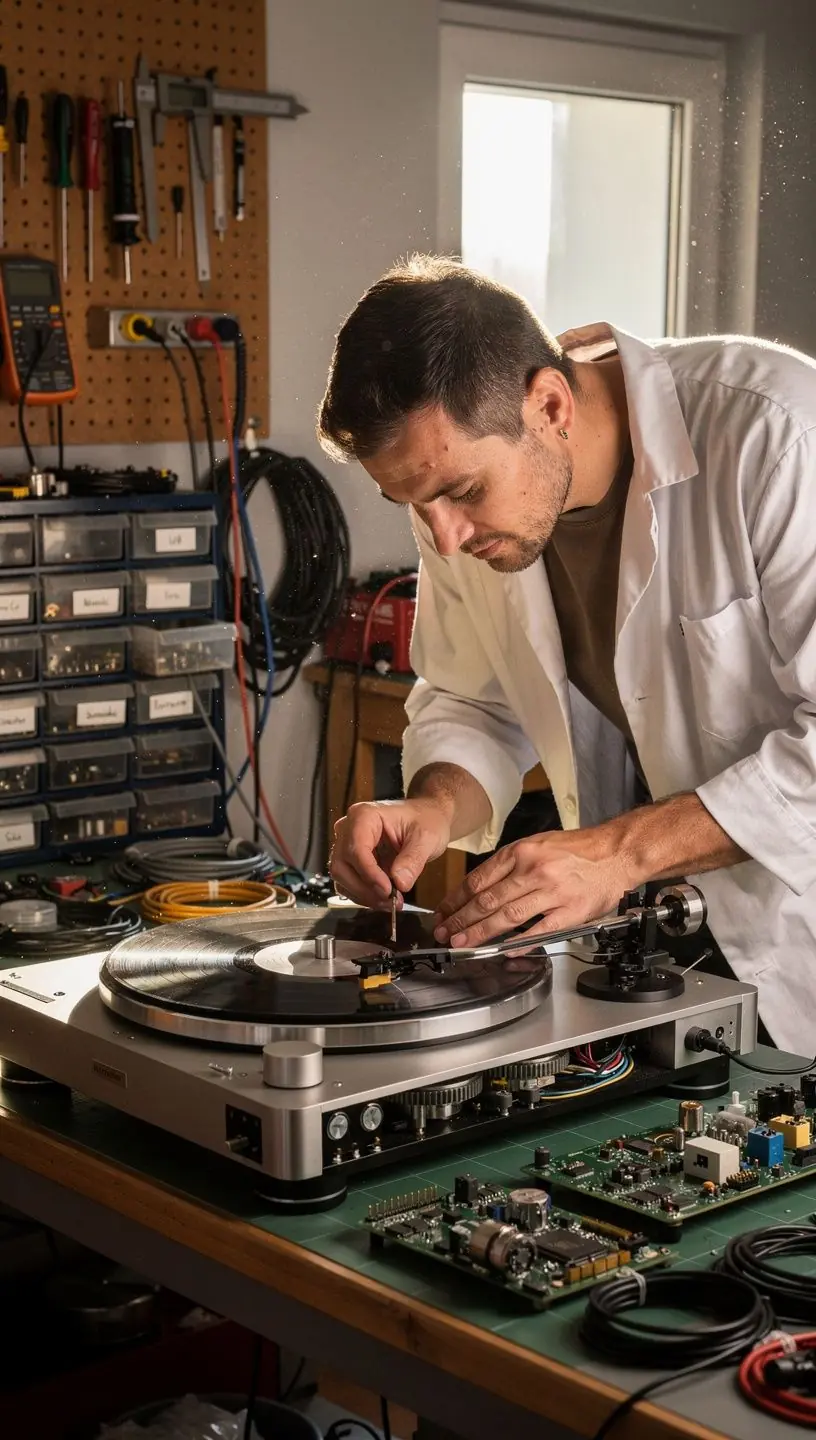
Exploring Different Types of Turntable Drives
When it comes to vinyl turntables, the type of drive system can significantly impact audio quality and performance. In this article, we delve into the different types of turntable drives—belt drive, direct drive, and idler wheel—and explore how each system works and their respective advantages.
Understanding Turntable Drive Systems
Turntable drive systems are crucial components that affect the playback of vinyl records. They primarily fall into three categories: belt drive, direct drive, and idler wheel. According to industry experts, the choice of drive system can influence not only sound quality but also the stability and longevity of the turntable.

"The choice of turntable drive system can impact the listening experience and overall performance of vinyl playback." - Audio Engineering Society
Belt Drive Turntables
Belt drive systems use a rubber belt to connect the motor to the platter. This design effectively isolates the platter from the motor vibrations, which many audiophiles find beneficial. Studies show that this method often results in less noise and improved sound quality, particularly for critical listening environments.
However, belt drive turntables require periodic maintenance, such as belt replacement, which typically takes place every few years depending on usage. This system is often recommended for those who prioritize sound quality and are willing to invest time in maintenance.
Direct Drive Turntables
In contrast, direct drive turntables feature a motor that is directly connected to the platter. This design allows for quick start-up times and consistent speed accuracy, which is especially important for DJs and live performances. Many users report that direct drive systems are more durable and require less maintenance compared to belt drive systems. However, they can transmit motor vibrations to the platter, which may affect sound quality.
Direct drive turntables are often favored in professional settings due to their reliability and performance capabilities. According to research, they may not be the ideal choice for those focused solely on audiophile-grade sound quality.
Idler Wheel Turntables
The idler wheel drive system, while less common today, utilizes a rubber wheel that engages the platter and the motor. This design can provide the benefits of both belt and direct drive systems, offering strong torque and good sound quality. However, it often requires more maintenance to ensure optimal performance, as the idler wheel can wear out over time.
Experts suggest that idler wheel turntables are suitable for enthusiasts who appreciate vintage equipment and are willing to take the time for upkeep. This system can deliver a unique character to sound reproduction, which many audiophiles find appealing.
Conclusion
In summary, understanding the differences between belt drive, direct drive, and idler wheel turntables is essential for anyone looking to invest in vinyl playback equipment. Each system has its advantages and limitations, and the best choice typically depends on individual preferences, use cases, and willingness to engage in maintenance. Whether you're a casual listener or a serious audiophile, selecting the right drive system can enhance your overall vinyl experience.
If you're considering a turntable repair or maintenance service, we offer diagnostics and restoration to ensure your analog audio equipment performs at its best. Connect with us to learn more about how we can help.
Learn More